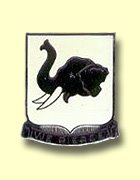
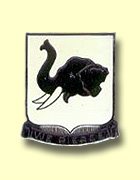
 My years as an armor officer stationed in Germany were sort of a cross between M*A*S*H and Catch-22. Shortly after my return to the United States, I began a book about those years that I have never completed. The regimental logo for my unit was a black elephant’s head on a white background. Each of the four battalions has a nickname beginning with the letter “R” and somehow related to elephants. My battalion, the Second, was called “Rogue.” Thus the working title of my book has been: The Rogue’s Tale: How to Step on Your Trunk without Really Trying.
Below I chronicle one of the events that took place when I was a Rogue officer. I originally published it in five installments during the first few months I was blogging. However, I have had several people ask that I post it as one story, which I am doing today in celebration of the one year anniversary of Nick’s Bytes.
I understand that people can tell the same story as a tragedy or comedy. I have written this tale from the standpoint of the 11th Commandment: Thy shall not take thyself seriously.
Never Let a Supply Clerk Drive Your Tank
None of it should have happened. Had I not been so enthused about the idea of “playing solder,” it wouldn’t have.
I had been an armor platoon leader for about three months. The only time I had been around my tanks was when they were parked in the motor pool. That day the company was going to the field to practice retrograde (the army’s euphemism for “retreat”) operations. I would have the opportunity not only to command my tank, but also my platoon of five tanks.
Unfortunately, that morning I also had to go to the brigade headquarters on some sort of business. I no longer remember what the “business” was. However, I do remember that I completed it as soon as possible and somehow obtained a ride to the training area where “B” Company was maneuvering.
When I arrived, I learned that my tank driver had had to return to the billets. So here I was, my tank (nicknamed
Backache for some very good reasons) waiting for me, ready to really command my platoon, and I had no driver. Of course, I could have taken command of one of the other tanks, but that didn’t seem “fair.” I was about to sit out the training exercise and allow my platoon sergeant to continue commanding the platoon when someone reminded me that our company supply clerk had been trained as a driver. So, with the permission of my company commander, I enlisted the clerk to drive Backache.
Finally I was commanding an armor platoon! My tanks took up their defensive position. At the command from the C.O., the platoon in front of us moved out of their position and took up a new position behind us. Then the C.O. ordered us to do the same. And that is when it happened.
My supply clerk of a driver accelerated the tank to a speed that sent those of us inside of` it bouncing around off steel. I was standing in the commander’s position with my upper body extended above the turret. And I was holding on with both hands as we bounced across the rough terrain.
The helmet of a tanker contains a radio/intercom. There is a switch on the left side of it that allows one to either broadcast on the radio or speak to the tank crew via the intercom. My switch was set on “broadcast” because I was in communication with my commanding officer. To switch to intercom so that I could communicate with the driver, I had to let go one of my hands that were holding on to the tank for dear life and throw the switch. Just as I did, the tank went over a ridge and I was thrown up into the air. When I came down, my left leg hit the sharp corner of the steel hand grenade box. I felt a sharp pain in my leg. The helmet’s radio had become unplugged and I was bouncing around inside the turret, as were the rest of the crew, the gunner and the loader. And my supply clerk driver continued to drive as if he was in the Indianapolis 500.
When the gun tube of a tank is pointed forward, those in the main compartment cannot see the driver. However, when it is pointed over the back deck of the tank, the driver can climb out of his compartment or someone else can climb into it. The gunner can control the position of the gun tube and that’s exactly what he did: he rotated the tube toward the back deck and then grabbed the back of the driver’s shirt. When he got the driver's attention, he yelled, “”Stop this damned thing!” The tank slowed and stopped.
I pulled my self to my feet and climbed out of the turret onto the deck, intending to walk to the driver’s area and have a few select words with this would-be Parnelli Jones. As I walked across the deck, I felt something running down my leg. I looked down and saw the V-shaped tear in my fatigue pants that had been made when I hit the hand grenade box. Then I saw the blood. Lots of blood. And that’s when I collapsed on the deck of my tank.
From Flat on My Back on a Tank’s Deck to Flat on My Back on a Gurney
So there I was, collapsed on the deck of my tank, with blood flowing from the cut on my left leg. I don’t remember feeling anger at the driver—just shock that I was injured and bleeding.
Within minutes of
Backache, my M-60A1 tank, coming to a stop, Hugh, my company commander, was beside me on its deck. He made a tourniquet out of something and tied it around my leg above my knee. It was at about this point that the pain first began to really hit me. I remember looking up into the cloudless German sky and seeing the sun and a big bird circling high above me.
Hugh had flown helicopters in Vietnam before coming to Germany to command “B” company of our armor battalion. As I learned later, after applying the tourniquet to my leg, he radioed that “big bird,” which in reality was a helicopter. The chopper landed and several men carried me to it. I remember the pilot telling Hugh that he did not have enough fuel to fly to the army hospital in Wurzburg, so he’d take me to the brigade infirmary at Schweinfurt.
Some of what happened after this I learned later. The pilot radioed Schweinfurt that he was coming in with an injured man and asked that medics meet him at the dispensary helipad. Unfortunately, when our chopper arrived at the dispensary, he couldn’t land because another helicopter was already sitting on the pad. With his fuel running short, he decided to land in the PX parking lot and radioed the dispensary requesting an ambulance meet us in the parking lot.
Once we landed, we waited several minutes, but no ambulance came. The pilot again contacted the dispensary and was informed that they couldn’t locate an ambulance driver. Thus, the pilot requisitioned a PX delivery truck. The crew of the helicopter moved the boxes in the back of the truck around so that I could be put on its floor. I was driven to the dispensary in the back of the truck as I used both my arms to keep the stacked boxes from falling on top of me.
At the dispensary I was placed upon a gurney and taken to an examining room. The MD on duty was a German civilian contracted by the army to supplement the military doctors. He cut my fatigue pants and looked at the wound. He shook his said and mumbled something in German which I didn’t understand, even though I had studied German at the Defense Language School in Washington, D.C.
The doctor then called for a nurse and together they cleaned my wound and put a bandage around my leg. Then both left the room. About half an hour later, another nurse came in and told me that “as soon as we can find an ambulance driver” I would be driven to the 3rd Infantry Division’s hospital in Wurzburg. Since the trip to Wurzburg was a long one, I asked about being flown in a helicopter. The nurse said that would be best, but the only helicopter they had available was grounded, besides which they couldn't locate a pilot. No driver and no pilot? I came close to feeling panic.
The pain in my leg was by then more than I could tolerate and I asked her if I could have some medication. She replied that no MD was then on duty (the German doctor had already gone home) and she couldn’t give me anything without an MD’s orders. I think I growled something at her.
The Emergency Room in Wurzburg
“Get off that thing and jump up on this table.”
Since the doc was purportedly a major and I was a second lieutenant, I assumed that was an order. I slipped off the gurney, doing my best not to put pressure on my injured leg, and hopped on my non-injured leg the ten or so feet to the examining table. It was a high table—the top was about four feet from the floor—and it took me a few moments to figure out how to get up on it without putting pressure on my leg.
I say that the doctor was ostensibly “a major” because the only proof of his rank—or that he was even a medical doctor—was what he told me. He was wearing a short-sleeved golf shirt and Bermuda shorts and had evidently come directly from the golf course. And he was none too happy about being in the Third Infantry Division’s emergency room rather than on the fairways—at least that seemed to be what his sharp order to me implied.
The ambulance ride from Schweinfurt to Wurzburg, once a driver had been located, had not been too eventful. This SPC 4 seemed to think he was driving in the Indy 500 as much as my co-opted supply clerk tank driver had. I really didn’t mind, because the pain in my leg was steadily increasing and I looked forward to getting to the hospital and receiving something sort of medication to reduce it. I decided to tolerate bouncing around in the back of the ambulance if it shortened the time of the trip to the hospital.
When we arrived at the hospital in Wurzburg, a couple of medics rolled the gurney, with me on it, from the back of the ambulance through the emergency room entrance and into a very large the examining room. They left. And no one else came in! There I was, flat on that gurney for at least an hour and a half—no doctor, no nurse, no medication for the pain!
About forty-five minutes after I arrived in Wurzburg, a telephone began to ring. I waited for someone to come in and answer it, but no one came. Finally, since the phone was relatively close to my gurney, I reached for it and answered it myself.
“What are you doing answering the phone?” said the voice of my battalion commander, LTC Johnson.
“I’m the only one here, sir,” I responded.
“Let me talk to your doctor,” my C.O. said.
“Sir,” I replied, “there is no doctor here. I am alone in this room and have been since I arrived.”
After asking me how I was doing, and my responding with a simple but untrue “O.K.,” Colonel Johnson ended the conversation with “Well, Nick, I think you’re going to be doing a lot better real soon.”
It was about forty-five minutes later that the unnamed major in golf clothing arrived.
After I “jumped up” on the examining table, the doctor unwrapped the bandage that had been placed on my leg by the German MD in Schweinfurt. He seemed to look at it only a few seconds. Then he muttered something and replaced part of the bandage over the wound without re-wrapping it. He then walked out of the room. And I was alone again.
About fifteen minutes later two medics came into the room. One carried one of those open-backed hospital gowns that always lets your butt hang out. The other took scissors to my fatigue pants and literally cut me out of them. Then they helped me out of my shirt, boots, socks, and underwear and into the gown and onto another gurney. Neither said a word to me and I was in too much pain to ask any logical questions.
Medic #2 rolled the gurney—and me—out of the examining room and down a long hallway. I tried to see where we were going, but the combination of trying to lift and turn my head backwards and the instability of the wheels of this wobbling gurney made my stomach rebel. So I gave up.
As we were going down that hallway, medic #1 suddenly appeared with a form on a clipboard, which he handed to me along with a pen.“Please sign this, sir,” he said.
I tried to read the form but the wobble-bobble of the gurney made reading impossible. So I asked, “What am I signing?”
Medic #1 replied, “It’s a standard form, sir. It simply says that you give us permission to dispose of any body parts the surgeon cuts off.”
Surgery, Local Anesthesia, & Sally
By the time I arrived in the operating room of the Wurzburg Army Hospital, it had been at least seven hours since the tank accident. I can’t say that the Medic’s words—“It’s a standard form, sir. It simply says that you give us permission to dispose of any body parts the surgeon cuts off”—didn’t concern me. However, the need for some sort of relief from the throbbing pain in my leg concerned me more.
A couple of medics slid me from the wobbling-bobbling gurney that had transported me from the emergency room onto the operating table. When I looked up from the table, I saw were two doctors and two nurses in scrubs standing over me. Neither of the surgeons was the major who had seen me earlier; I assume that he was now teeing off back at the golf course.
One of the doctors introduced himself to me and explained that I had a very bad wound that exposed the bone below my left knee. (I knew about the wound; I really didn’t want to know about the bone). He then said that, luckily, my leg wasn’t broken and that they needed to remove some damaged tissue and close the wound. Unfortunately, he said, they had no anesthesiologist available: much of the hospital staff had been sent to the Middle East because of some crisis. Thus, he said, they weren’t able to sedate/knock me out, but would use local anesthesia.
“Local anesthesia,” I remember thinking. "Like the Novocaine the dentists use that has never stopped the pain of drilling on a tooth? Shit!"
I will admit that they added an additional pain killer in the form of a large bosomed, blond nurse who stood beside my chest and held my hand as the needles pricked my leg. She told me her name was Sally and she was from Kentucky. I told her that I was also from Kentucky and we talked about our homes as everyone waited for the anesthetic to numb my leg.
Of course, as I feared, the local anesthetic never did completely anesthetize my leg. And when the surgeon began “removing tissue,” I found that Sally had another duty besides holding my hand and distracting me with small talk: to lie across my chest and hold me down when the pain of the surgeon’s knife induced me to sit up. Under most conditions, two large breasts pressed against my chest would have been extremely pleasant. However, as well endowed as Sally was, she was unable to distract me from the pain.
After the surgeon’s first few snips—and in response to my scream—they decided to inject me with more anesthetic. It didn’t help; however, I did decide that screaming wasn’t appropriate for an officer and a gentleman in the Army of the United States of America. So I gritted my teeth and clamped my mouth shut. From then on, in response to the surgeon’s cutting, my response was to lift up my chest as Sally boobs push down on my chest.
I have no idea how long the surgery lasted. I do remember that the doctor eventually said, “Just a little more and we’ll be done.” That “little more” seemed to me to be the most painful of the cuts he made. Then one of the surgeons walked up to where I could see him and talked to me as the other one continued to fiddle with my leg. He said that because of the width and depth of my wound they were unable to close it using stitches. Instead they were putting in steel wires which they would later tighten after the wound had drained. When today I look at the 11 inch scar on my leg, I can still see some of the marks those wires left on either side of the wound.
When all was done, I thanked the surgeons and nurses, Sally kissed me on the cheek, and I was placed back on that wobbling-bobbling gurney and rolled to the recovery room, where I experienced a new episode of a different kind.
Recovery?
“And what did you do in Italy?”
The recovery room nurse was talking to a doctor. They were sharing stories of their madcap vacations. I was in no mood to eavesdrop. I was tired, hungry, and in pain.
After the wire sutures had been placed in my leg, I was transfered onto another damned wobbly gurney and rolled into the recovery room. My leg throbbed with pain: the local anesthetic never did kick in fully. Even though the nurse and doctor were less than twenty feet from me, I couldn’t get their attention.
I also couldn’t rest. The ceiling lights were the brightest I have ever encountered other than the million plus candle-power searchlight on
Backache, the
M60A1 Patton tank whose steel hand grenade box had cut this 11-inch wound in my left leg. I would close my eyes—and the light was still there. I would pull sheet over my face—and the light was still there. It was irritating and spoiled any chance of sleep.
Not only were my eyes under attack from those ceiling lights, but my ears were, too, from the moaning and howling of the guy in the bed next to me. He had had an operation on his legs for varicose veins. He was evidently in great pain—obviously more pain than me. And like me, the newly-tanned-from-their-vacations doctor and nurse were more interested in discussing their leaves that responding to us two soldiers who were in pain.
Besides my eyes and ears being assaulted, I was also hungry—very hungry! At that point in this misadventure I had no idea what time it was or how long it had been since I had breakfasted. I did not even know if it were day or night. I did know that my stomach was shrieking for food.
The doctor finally finished telling the story of his trip to Italy and the nurse her story of her leave somewhere on the Mediterranean coast. She came to the side of my bed and handed me two pills in a small paper cup along with a cup of water in the same size paper cup.
“Take these,” she said.
“I’m hungry,” I said
“The kitchen is closed,” she said.
I took the pills. I don’t know what they were, but when I awakened several hours later, the guy wailing from the varicose vain operation was no longer in the bed beside me. A couple of male orderlies were sliding me onto another bloody gurney, and I was wheeled to the officers’ ward of the hospital.
“I’m hungry,” I said to the ward nurse.
“We didn’t know you were coming,” she said. “So we didn’t order a breakfast for you.”
Again I said, “I’m hungry.”
And the nurse handed me two pills in a small paper cup along with a cup of water in the same size paper cup.
“What the hell,” I thought, “with dope like this, who needs food?"


 After losing my ability to taste last weekend and developing an increasingly painful and swollen throat Tuesday evening, by Wednesday morning I was in dire need of relief. I telephoned MD2U even before they opened Wednesday and continued telephoning until I spoke to the scheduler and told my throbbing story.